


Thank you for following our live report today.
Come back tomorrow morning for the latest news, analysis, and commentary on the MPC’s interest rates decision.
Hold tomorrow may be ‘calm before storm’ with potential rate hikes later this year
While most experts agree that rates are unlikely to change tomorrow, where they go next is less certain.
The market is currently pricing in rate hikes later this year as the Bank deals with the economic fallout from the Iran war.
Hikes would hurt borrowers as the cost of credit, like loans and mortgages, will become higher.
Harriet Guevara, chief savings officer at Nottingham Building Society, said: “The Bank is almost certainly going to hold at 3.75% on Thursday, but that should not lull anyone into thinking the hard decisions are behind us.
“Inflation remains above the Bank’s 2% target, energy bills went up 13% at the start of July, and the conflict in the Middle East continues to push up oil and gas prices. Put all of that together, and markets are now pricing in one to two rate rises before the end of the year, meaning that a hold this month could be the calm before the storm.”
She added that while higher rates will mean mortgage rates are likely to rise, the silver lining is that savers will be able to enjoy higher interest rates on their savings – so long as they make sure they are getting the best rate.
Deutsche Bank: MPC expected to vote to hold rates by 7 to 2
Interest rates are set to stay at 3.75% at tomorrow’s interest rates announcement, according to predictions from Deutsche Bank.
The bank expects that, despite worries of second-round inflation effects from energy price hikes, the MPC will keep the Bank rate unchanged.
They expect the MPC to keep rates at 3.75%, with seven members voting to hold and two voting to raise rates.
The two dissenters are expected to be BoE chief economist Huw Pill and external member Megan Greene – the same two who voted to hike rates at the last MPC meeting.
Sanjay Raja, chief UK economist at Deutsche Bank, said: “We expect the Bank of England to remain on the sidelines for the rest of the year. But there are clear risks to our call.
“A second energy wave will likely amplify uncertainty around the inflation path and the risk of second-round effects. We see upside risks to the interest rate outlook in the near term, with much dependent on the duration of the unfolding energy shock.”
What is the economic background of this month’s decision?
Alongside inflation, the MPC also looks at other economic metrics to help inform their decisions. One key measurement is the state of the labour market.
In the orthodox view of economics, a poorly-performing labour market pushes down inflation as higher unemployment and slow wage growth means people have less money to spend. With lower demand, prices fall.
The latest labour market data, published on 21 July, showed unemployment remained at 4.9% in the three months to May for the second month in a row, the highest level it has been for six years.
Meanwhile, regular wage growth also remained at a six-year low. Regular earnings held at 3.4% in the three months to May, rising to 4.3% when including bonuses.
The UK economy is also growing very slowly. GDP growth in the month to May was just 0.1%, reversing a 0.1% drop in GDP in the month prior.
Where is inflation, and where will it go this year?
Inflation is one of the key economic metrics used by the MPC to help decide whether to move interest rates.
The Bank of England has a mandate to keep inflation at 2% in the medium term, so when inflation is too high, rates tend to be hiked. When inflation is too low, rates tend to be lowered.
Inflation in the UK has been mostly above the 2% target since July 2021, though at points it has briefly been at or below the target.
The most recent set of inflation data shows inflation dipped to 2.6% in the year to June, down 0.2 percentage points from the previous month.
Price growth has broadly been falling since September 2025, but the Iran war has meant most forecasters expect it to rise in the final quarter of this year.
Estimates by the Bank of England, published on 18 June, shows inflation is expected to stay just under 3% for most of 2026 before rising to a “little over” 3.25% in the final quarter of the year.
The Bank of England is set to release a new inflation forecast tomorrow.
What should you expect from tomorrow’s MPC meeting?
Most experts agree that the MPC is most likely to hold interest rates at 3.75% tomorrow as the impact of the Iran war on the UK economy is still uncertain.
The current economic data is inconclusive about the long-term impact of the Iran war on the UK. Although inflation figures have been lower than expected so far, inflation is still forecast to rise in the final quarter of the year.
This makes it very difficult to justify lowering interest rates, as a cut would likely mean fuel a rise in inflation, when it is already forecast to increase..
On the other hand, raising interest rates presents its own challenges. A rate hike would hamper economic activity as borrowing becomes more expensive.
With the lack of conclusive economic evidence about how the UK is being affected by the Iran war, the Bank of England believes a ‘wait and see’ approach is the best one. The MPC is awaiting concrete data with which they can confidently assess the impact of interest rate changes before they bring any in.
This is why most experts believe the MPC will hold interest rates at 3.75% tomorrow – there isn’t enough data to justify a rate hike or cut at the moment.
Where have interest rates gone recently?
In the last six years, interest rates have gone from being as low as 0.1% to as high as 5.25%. Much of this period is dominated by the covid-19 pandemic and its consequences.
When the pandemic first hit, the MPC decided to push rates down to 0.1% to help stimulate economic activity.
Then, when the economy opened back up and the cost of living crisis began to be felt, interest rates were repeatedly hiked to combat rising inflation.
More recently, the Bank of England started to cut interest rates. Between August 2024 and December 2025, the MPC voted to cut interest rates six times, each time by 0.25 percentage points.
This gradually brought the Bank rate down to 3.75% in the last MPC meeting of 2025.
At the end of 2025, most experts believed that interest rates would be brought down by another 0.5 percentage points by the end of 2026, settling at around 3.25%.
However, the Iran war made the MPC change course. Since the war began on 28 February, the MPC has kept rates on ice at 3.75%, adopting a “wait and see” approach to future rate movements.
What is the Monetary Policy Committee (MPC) and what happens at their meetings?
The Monetary Policy Committee (MPC) is a group of nine experts appointed by the Bank of England responsible for setting interest rates.
The committee is made up of five senior Bank of England staffers and four external experts who are directly appointed by the chancellor.
The MPC members from the Bank include governor Andrew Bailey, deputy governors Dave Ramsden, Clare Lombardelli, Sarah Breeden, and the Bank’s chief economist Huw Pill.
The external experts are selected to ensure the Bank benefits from outside expertise from academia and industry. They include Alan Taylor, Catherine L Mann, Megan Greene, and Swati Dhingra.
A representative from the Treasury is also present. They are allowed to speak about policy ideas, but are not allowed to vote.
The MPC meets every six weeks to vote on whether to cut, hold, or raise interest rates and each vote has equal weight. The governor of the Bank votes last and has the deciding vote in the case of a tie.
Interest rate decisions are usually announced on a Thursday, though the meeting itself typically takes place on the day before the announcement.
At their last meeting, the MPC voted to hold rates at 3.75%, with the motion passing by seven votes to two.
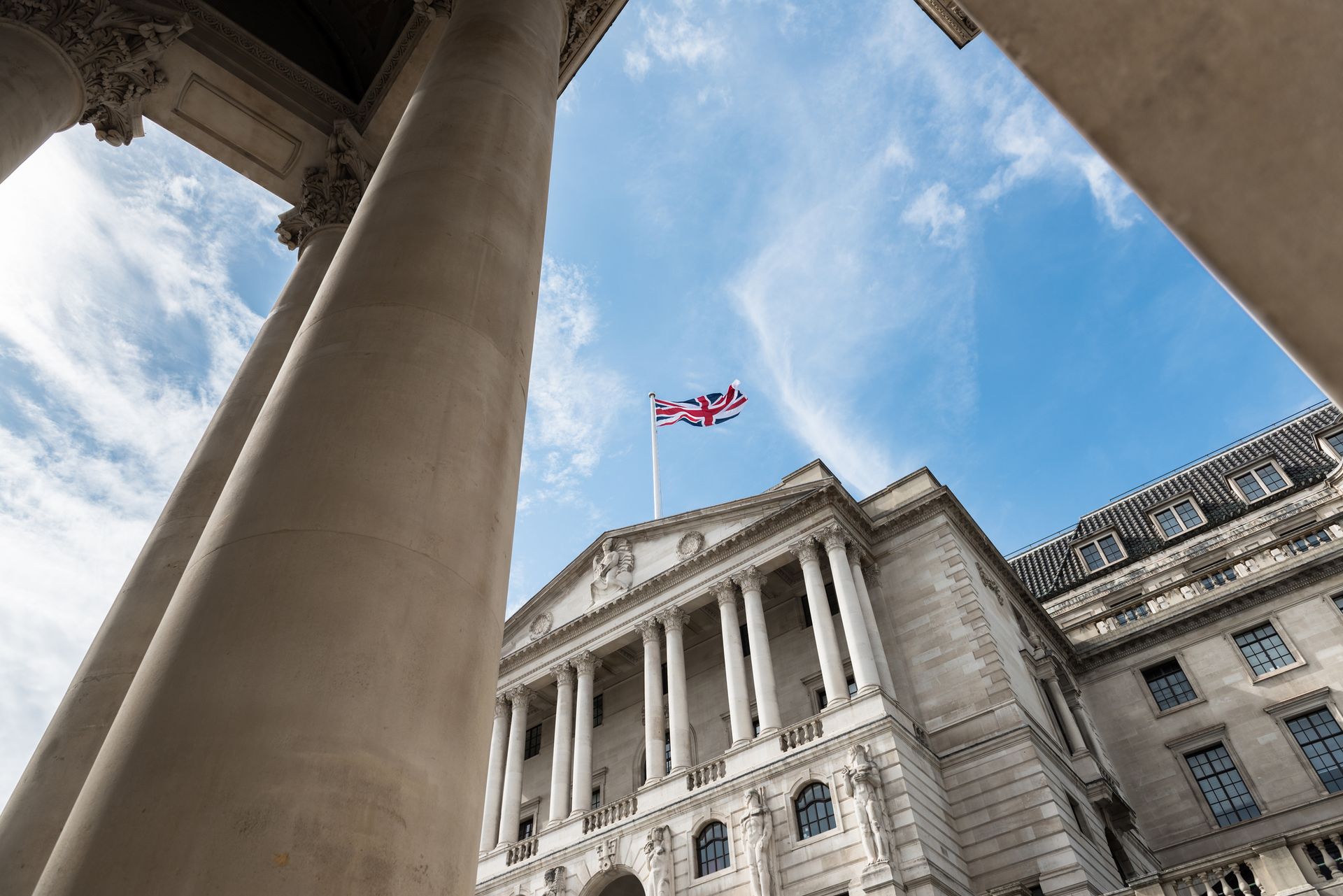
(Image credit: Tim Grist Photography via Getty Images)
